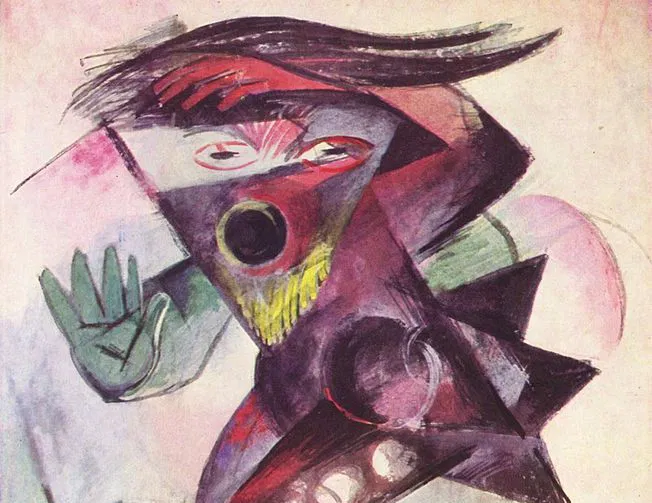
Pain led me on a spiritual journey. Before it, I assumed everything followed clear causation — like a billiard ball striking another into the corner pocket. But pain troubled my logical mind and drove it into a frenzy. Every method I tried failed, leaving me not with cures but with perception itself as my target.
Now, on the other side of a nasty back injury, I’m more open to the universe than ever.
I’ve experienced a few physical injuries in life, the most agonizing involving my back — two of which caused chronic pain for nearly two years. I tried everything: chiropractors, physiotherapy, massage, naturopathy, acupuncture, acupressure. None brought lasting relief or even clear change, for better or worse. But persistent pain demands action. Even ineffective treatments held hope: maybe it would work eventually, maybe I needed to play the long game. When one failed, I reached for another.
My Instagram showed me ads for that one secret I was missing: gradual exposure, muscle imbalance, poor strength, inflexible hips and feet, and psychological pain. But these annoyed me since they framed a specific plan as universal treatment. Plus they were all in competition with one another, such that they framed other methods as false prophets, which I felt showed a lack of respect for someone else’s hard work. It seemed there were two sides: those who saw proper form as needless, and those who felt correct posture was key. It was a battle between the cavalier and careful.
I started my second back pain journey where I ended my first: Stuart McGill’s Back Mechanic. He belongs in the careful camp. He argues that backs are injured from a combination of too much activity and too little rest. Injury is inevitable, he says, when heavy load and poor form is added to the equation. He compares the spine to stacked oranges supported by guy wires and linkages, an impressive engineering feat that aims to be flexible but strong. Although the spine can bend, it remains quite rigid, such that too much repetitive flexion compromises it, much like a twig bending back and forth hundreds of times snaps.
So I followed his advice and used my hips as my power center, which meant I kept my back neutral. I even extended this perfect form into daily life: I brushed my teeth upright and braced with one hand on the counter; I tied my shoes by propping my foot on a table; I sat on the toilet straight up.
This was step one: remove pain through perfect movement. Step two was rebuilding strength through his “Big Three” exercises — bird dogs, planks, curl-ups — which are low-load movements meant to protect the spine while restoring confidence.
But what worked once didn’t work twice. My second bout of back pain was not only intense; it was confusing. The McGill method, and the accompanying diagnostic procedure, produced inconsistent results. My pain was ever present. Walking could trigger pain, even the smallest amounts. At some point I reconciled to do what I could despite how insignificant it seemed. I slept on a 2-inch blow-up mattress for stability, and placed an inflatable pillow under the small of my back. Regardless, the pain reached such an extreme that I started taking Lyrica to reduce the suffering.
An MRI showed a disc extrusion at the L5-S1 level. It touched my nerve enough to warrant the obvious conclusion: it caused pain. With or without this information, my treatment remained similar, only now the goal was to stay as active as I could despite the pain, which meant doing what I felt comfortable with. I walked, did the Big Three, and added push/pull exercises as tolerated.
I had spent months guarding my back. Now I wondered if guarding was the problem.
I picked up the book Crooked: Outwitting the Back Pain Industry and Getting on the Road to Recovery by Catharine Ramin. She, too, found herself among the cavalier types after considering other options. She contacts Brian Nelson, a man with an aggressive rehab program designed to push patients through discomfort and fear so that the spine can be conditioned. He calls it MedX, after the back extensor machine that allows patients to gain back muscle with as little friction as possible and with total lumbar isolation. The attitude is clear: push through the fear of reinjury since it’s preventing you from gaining the strength needed to stay pain-free.
I found it hard to apply to myself since I had the opposite problem: overtraining. I biked to and from work, swam twice a week, lifted weights twice a week, worked a physical job, and played soccer. I was already fit. I felt strong. And none of my therapists seemed to think I had a strength issue.
After many failures to heal, therapists started to mention surgery. Most of the stories I heard were positive; the surgery worked for others in my situation. But I tangoed with the knife before, having carpal tunnel release surgery years earlier. That surgery didn’t work, even though positive outcomes were reported in research papers. Plus, I could get better from surgery or stay the same, but I was cognizant of that third option—getting worse.
When the body offered no clear answers, I turned to the mind. I read a book by Peter Levine called Waking the Tiger, and another called Healing from Pain by Maggie Phillips.
Peter’s book is focused on somatic therapy, which asks us to pay attention to the body rather than the mind. Peter works with patients to unearth trauma in their lives through this approach. This trauma, like PTSD, can cause physical pain and suffering. He walks through his sessions and highlights how we bury emotional pain in the body. By bringing awareness to it, we aim to feel safe in its presence. He explains breathing exercises where he asks us to breathe into the pain, or bring a warm light into it from our heart. I could sense, after much practice, where I felt unpleasant sensations in my body. A burning feeling in my chest, for example, made me anxious because I assumed I was ill, and I’d never felt it before. But I noticed it came up often when I looked hard enough.
Even though I found the exercises insightful, I still had pain.
In Maggie’s book, her main focus is that persistent pain despite reasonable treatment points to trauma trapped in the body. But we focus on the mechanical aspect of pain instead, and begin to identify with it. Pain is no longer something we experience; it is who we are. The exercises in her book are designed to shift this “I am pain” thinking towards “I am experiencing an unpleasant sensation.” This is how we stop the pain loop that begins with the threat of pain, which then proceeds to fear, and then bracing, then pain, then collapse.
This anxious loop is solved by slowing down, she says, and not by busying ourselves with a task. Breathing exercises help us stand at a distance from the fear of pain and anxiety. We also take control over a situation which seems helpless through observation and de-escalation. We move away from a freeze response and into a calmer state of mind, in theory, by creating a sense of safety within ourselves. Essentially, we look inwards for the solution, not outwards towards external remedies.
I tried her breathing exercises. I even started to talk to my pain. I imagined it as a black rock sticking into my back. I pushed a glowing light from my heart into it. I let it expand into my body; I let it breathe.
This process helped me relax, but it didn’t remove the pain. I searched for more answers and shifted toward the purely psychological through the work of Howard Schubiner and Dr. Sarno.
Sarno’s book Healing Back Pain has a cult following. There’s a website where you can find patient testimonies. Most of them read like the work of a miracle worker. This raised red flags, but I was desperate, and what harm could reading the book cause? In sum, Sarno feels back pain is overdiagnosed as a mechanical issue. He points to inconclusive correlations between physical injury and pain. Many people, in fact, have disc herniations without significant disability. Many have zero pain. People with bad backs, rather, are suffering from a spiritual malaise. They either have buried trauma, or they have convinced themselves they are incapable of physical activity to such a degree that it has sensitized their nervous systems.
Sarno encourages us to get back to activity and to stop being scared of the pain. That knowledge alone is supposed to alleviate a majority of cases. If that didn’t work, patients needed some psychotherapy to unearth the root of the pain, which could be trauma linked to poor attachments with family members. But his method doesn’t go in depth towards counseling; rather he focuses his energy on education. He educates back-pained people about how the brain can create discomfort without physical causes, and about how avoiding activity only makes it worse.
By now, in trying to master pain, I had made it the center of my life. It became just as easy to obsess over the psychological as it was to overthink physical movements. I began to diagnose many stresses in my life as triggers, from work issues to trauma. And all this obsessing and dialoguing with my pain turned me against myself. I couldn’t trust my own body.
Despite my trust issues, in desperation, I moved on to Schubiner. His method, called pain reprocessing therapy, takes Sarno’s approach but combines it with cognitive behavioral therapy and meditation to reprogram pain pathways—a neuroscience perspective. Many of the exercises ask us to dialogue with the pain, or with stressful events in our lives. One exercise, for example, asks us to come up with mental scripts when pain arises. These scripts frame the pain as an entity we can talk to, whether as a friend, enemy, or inner child. It, like Maggie’s book, reevaluates pain as separate from our ego. It isn’t who we are, and we need to see it as something we notice rather than something that becomes us.
I started seeing my relationship with it much like a parent and child. I was the logical parent, and my pain was the emotional child needing something at all times: “I know you’re upset, but the pain won’t help. I see you, and I want you to know that I’m there to protect you.”
But it didn’t stop there. Other times I saw the pain as a bully: “Get lost. Nothing’s wrong.” I reminded myself daily that I didn’t have a serious illness. I saw my emotions as just that, emotions, not something that I “was.” I zoomed out and looked at myself from outside my body. I listed all possible triggers for pain. I practiced self-compassion: “I am strong; my feelings are normal; this is hard; be kind.” I meditated on phrases: “I am strong; I am a mountain.” I comforted my inner child daily. I made a gratitude list. I wrote letters to parts of myself, friends, and family. I practiced forgiveness for past events and relationships. In the end, I felt like I had dissected every aspect of myself.
But even though I ended the program with a whole binder full of these exercises, I didn’t experience an awakening; my pain remained.
My next effort involved a therapist who used acupressure to sense where you were holding tension in the body. He was a fan of Sarno, and combined his thought process into the therapy. He assured me that he could get my muscles firing the right way. This involved pressure point taps, pushing back against his force, and various movements after adjustments. During one session, he recommended I see a counselor who knew about internal family systems, since he could sense that I had unresolved trauma with a family member somewhere. How he knew I don’t know, but I didn’t care. I moved on to the next thing.
In parts work, you look for sensations in the body, and then you try to dialogue with the part who lives there. The idea is that these uncomfortable sensations come from certain aspects of ourselves. Perhaps we get anxious going to work. The anxiety could appear in the throat, and arise from a child form of yourself that is scared. By acknowledging this part, we attempt to welcome it into our lives. In turn, we place the unpleasant emotion as a piece of the puzzle, and not who we are.
This sounds ethereal, but for those who need a scientific backing, let’s use it. As Schubiner notes, pain is caused by the brain. It can arise even from emotional pain, and does trigger the same parts of the brain as physical trauma. So the only thing required to feel pain is danger to our nervous systems, something we may or may not be aware of if it is emotional. I used to think I was scared of public speaking, but really there is a part of myself who feels rejected, and that old hurt is imprinted in my nervous system to protect me. It doesn’t cause physical pain, but the emotional pain leads to physical symptoms: sweating, yawning, panic attacks.
Still, I’m not convinced that a back injury can be caused solely by emotions, but I do think these types of fears lead to injury. Take perfectionists, for example. They may push themselves to work out so much that they cause an injury. This injury is seen as a lack of strength, so they train even more to fix the weakness, stressing the already hurt tissue. Overtraining is the symptom, but the fear of weakness caused the behavior. In this sense, I see pain as a psychological phenomenon, and I see how it can linger long past the damage.
Now that I’ve improved, I wonder what helped. In truth, the journey hadn’t cured me — it had changed my relationship to pain. Many times we look for external answers to our problems, but somehow the inner world gets ignored. By paying attention, and allowing for silence, that inner perfectionist that felt like training all the time is now known. I’m aware why he feels the need to excel, and why he wants to be perfect.
I see my pain as a spirit guide. I still suffer like everyone else, and I have my doubts, but I’m able to relax without knowing the answers to everything, and I feel significance in sitting still with myself. Those in pain at this moment won’t find much solace in this because it doesn’t provide immediate results. I got frustrated with it all, but I see the value of the journey.
Now when things are tough, I try to sit with myself in silence, rather than ruminate on causation. And that’s all a person needs when it’s the very thing pain has robbed them of: peace.
Listening to: Eva by Heart by Eva Cassidy
Reading: Out of Office by Helen Petersen and Charlie Warzel