Steely Dan is ironic, sardonic, polished, and sophisticated (yet oddly dark underneath it all). Spotify recommends yacht rock bands alongside The Dan, something like Kenny Loggins (that smoooth rock). It might go further and say “you’d like Michael McDonald.” It makes genre sense, but it ignores more subtle qualities.
Streaming algorithms think in terms of marketable music buckets. The algorithm knows (maybe knows is a stretch) Steely Dan is an LA based band with high production values and slick, funky grooves, but it misses Steely Dan’s sarcastic lyrics and dark undertones, qualities which bond them to other artists outside the 70’s era studio sound. In short, Steely Dan polishes dysfunction until it shines, whereas other yacht rock contemporaries practice optimistic, unguarded escapism.
A great example is Deacon Blues, a song that romanticizes failure and futility in a tongue-in-cheek manner. It’s upbeat, which sets an optimistic vibe, but the lyrics are sardonic. The word deacon itself suggests respect and authority, whereas blues drapes that notion in sadness. The song’s narrator, framed as Deacon, is a hard-working artist, a dreamer who plays the saxophone and stays up all night drinking whiskey before jumping behind the wheel: “I’ll learn to work the saxophone; I play just what I feel; drink Scotch whisky all night long; and die behind the wheel.” It’s the glamorous vision of a jazz artist paired with hyperbolic self-destruction — reckless behavior framed as tragic authenticity. Deacon is living life on his own terms; he’s a hipster failure painted as a success story.
Compare this to another Yacht Rock legend: Kenny Loggins. In This is It, co-written by Michael McDonald, we’re urged to seize the moment and summon inner resources to overcome difficulty: “make no mistake where you are; (this is it); your back’s to the corner; (this is it); don’t be a fool anymore; (this is it).” Same slick production and danceable beat, but the tone is sincere.
The Dan’s tunes have that pop sparkle of Loggins but they subvert the feel-good vibes with lyrical ambiguity. Is Hey Nineteen about forbidden love, disconnect, loneliness, or just growing old? The narrator expresses a disconnect between older and younger generations: “hey nineteen; that’s ‘Retha Franklin; she don’t remember the queen of soul; it’s hard times befallen; the sole survivors; she thinks I’m crazy; but I’m just growing old.” Later, the narrator shifts tone: “nice; sure looks good; mmm, mmm, mmm; skate a little lower, now.” The ambiguity is striking — is this sleazy seduction, or nostalgia for lost youth? The music presents us with party-vibes but the lyrics have the bitter aftertaste of a hangover: “the Cuervo Gold, the fine Colombian, make tonight a wonderful thing” lyric suggests he uses alcohol to bridge the gap, creating a morally crude and aging hipster figure atop pleasant grooves and harmonies.
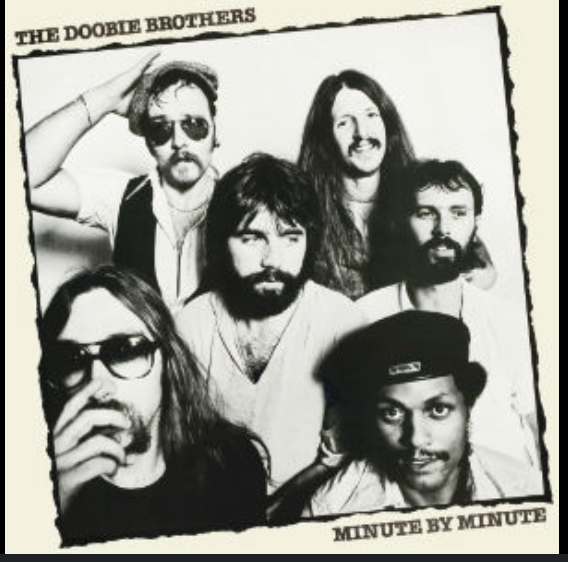
What a Fool Believes by The Doobie Brothers, more Michael McDonald influence, is another great contrast. Same yacht rock sheen and upbeat rhythm, but with a heartfelt lyrical tone. It describes false hope towards rekindled love after a breakup—which the narrator smothers in comforting illusions: “but what a fool believes, he sees; no wise man has the power to reason away; what seems to be; is always better than nothing; than nothing at all.” He sees what he wants to see, living an internal fantasy of bustling love rather than loss.
These artists are thrown into the yacht rock bucket, and they do have similarities, but each has their own identity which can be incompatible with one another. It’s hard to say “I like yacht rock” but it’s easy to say “I like Steely Dan,” simply because I’ve found qualities in the music I enjoy across multiple genres: syncopated, danceable, melodic, humorous, harmonically dense. I struggle to find anything I want to listen to when relying solely on an algorithm because artists might use one of these qualities but not others, and then I’m scratching my head wondering why I don’t enjoy Boz Scaggs compared to The Dan (both are labeled as Yacht Rock).
Here’s a better Spotify recommendation: Chromeo. It’s a similar idea: funk grooves paired with sarcastic lyrics—they even have that smooth sentimental edge to some of their songs like Loggins. But rather than lyrics about LA’s burnouts and wannabes, Chromeo writes about tricky relationships.
Chromeo’s My Girl Is Calling Me (A Liar), for example, is a satire on arguments with your partner. We hear Dave 1 say: “let’s keep the screaming and the fighting and the crying to a minimum; and if the kitchen don’t work, we can fight in the living room,” which is followed by the chorus: “my girl is callin’ me; my girl is callin’ me (a liar).” She’s calling him—but not for any reasons he’d hope. At the end, P gives him the advice to “take her to the movies” and it will all work out. Chromeo trivializes what sounds like a toxic relationship—just ignore it and it’ll be fine—but we jump up and dance to the dysfunction, an odd pairing that when looked at with any seriousness becomes absurd (and I love it).
Here’s another shot at relationships: Count Me Out. The song is about someone suspecting their partner for cheating, but it has that signature funky production, which creates another absurd contrast against pleasure and pain. Take these two lyrics, for example, which both have a satirical edge : “and in the bedroom you’re trying all these new tricks that I don’t know (where’d you get that from?); and “I know that you’re free but I never knew a couple was supposed to be three.” It’s campy pain wrapped in irony, which when dressed up with funk becomes relatable and funny.
My core relation to The Dan and Chromeo, then, is a cultivated persona that is smirking at you overtop of glassy grooves, which brings me back to my original thought: why do algorithms miss the mark? It’s not like music recommendation is easy. Even people sharing music to each other can fall short, but I do know that algorithms miss subtle qualities, like sardonic humor paired with upbeat tunes. Another miss, a bigger stretch, is between classical composers and modern ambient music. Claude Debussy and Erik Satie both made music that embodied ambient qualities: sparse textures, open space, emphasis on atmosphere, minimal. But these composers are labeled classical, not ambient, and so I’m less likely to find them based on genre alone.
All music has a history, but there doesn’t seem to be a way for an algorithm to pull it all together for me. Like I said, genres feel more like marketing terms. I find it difficult to label myself as a particular kind of artist since I find inspiration in so much music that when I create things it’s one big pot of ideas that hopefully forms something I like. I do think that it’s easier to get an album recommendation from a close friend rather than a bot, and I wonder if my music discovery has slowed due to how much we tend to scroll through apps rather than have conversations with other people about music. Imagine I just told you about this connection to Chromeo and Steely Dan—is that more valuable than Spotify playlists? I remember I told someone I liked Thelonious Monk’s Monk’s Dream album, and they recommended a live set of his called Live at the It Club. It’s one of my favorite Monk albums, but it’s so obscure that it’s unlikely I’d find it without that musical network.
So consider this, at the very least, a recommendation to listen to some Chromeo and Steely Dan. It’s a music recommendation that might come back around later (“if you like Chromeo, Benno, try this”). But also think about music qualities, things that algorithms miss. Artists follow in each other’s footsteps, and what one artist makes is likely a response or addition to what someone before them already said. It’s a conversation, so we need to join it to get the full picture.
Listening to: Song’s of Her’s by Her’s